Best Personal Loans for Bad Credit Under 600 FICO
A credit score under 600 doesn't mean you can't borrow money—it just means you'll pay more for it. Americans with FICO scores below 600 face APRs between 9.99% and 35.99%, but lenders like LendingClub, MoneyLion, and Elevate still approve borrowers in this range at rates 5–10 points higher than prime borrowers. The key is knowing which lenders specialize in subprime lending and what terms actually work for your situation.
Educational note: This guide is for general US financial education only and is not personalized financial, investment, tax, legal, loan, insurance, or retirement advice.
Related reading: Compare alternatives in the personal loan vs balance transfer guide. If you are consolidating balances, read the debt consolidation loan vs debt management plan guide.
In 2026, approximately 27 million Americans carry a FICO score below 600, according to Experian data. If you're one of them, you're not alone—and you have real options. This guide walks you through the best personal loans available, how interest rates work, and exactly what to expect when you apply.
What Is a Personal Loan for Bad Credit?
A personal loan for bad credit is an unsecured installment loan designed for borrowers with FICO scores typically between 300 and 669. Unlike mortgages or auto loans, these loans don't require collateral—the lender relies solely on your creditworthiness and income to approve you.
Before applying, use a debt payoff calculator to see whether the new payment actually improves your payoff timeline.
Lenders evaluate bad credit borrowers differently than prime borrowers. Instead of just your credit score, they look at:
- Your current income and employment status (most important)
- Debt-to-income ratio (ideally below 43%, though some lenders accept 50%+)
- Payment history on existing accounts (even recent missed payments)
- Length of credit history (longer is better)
- Recent credit inquiries (too many in 90 days is a red flag)
Bad credit loans typically range from $500 to $50,000, with terms between 24 and 84 months. The tradeoff: higher interest rates (9.99%–35.99% APR in 2026) but faster access to cash than traditional banks.
Key difference for UK/Canada/Australia readers: While the FICO system is US-specific, equivalent scoring systems exist in other countries (UK uses Experian/Equifax, Canada uses TransUnion/Equifax). Many principles here translate, though loan terms and rates vary by country.
How Much Can You Borrow With a Credit Score Below 600?
Loan amounts vary by lender, income, debt-to-income ratio, state, and credit profile. A credit score below 600 can limit approval odds, increase APRs, and reduce the amount available. Treat any advertised maximum as a ceiling, not a guarantee, and verify terms directly with the lender before applying.
| Credit situation | Likely lender type | What affects loan amount | What to check first |
|---|---|---|---|
| Thin credit file under 600 | Credit union, secured lender, or bad-credit lender | Income, employment, DTI, collateral, state rules | Prequalification terms and fees |
| Recent missed payments | Specialist lender or secured option | Recent delinquencies, bank cash flow, loan purpose | APR, origination fee, payment size |
| Stable income but high DTI | Smaller installment loan or co-signed option | Existing debt, rent/mortgage payment, monthly cash flow | Whether payment improves or worsens payoff timeline |
| Rebuilding after collections | Secured loan or credit-builder path | Collection status, recent on-time payments, account age | Whether borrowing is necessary now |
Top Lenders for Bad Credit Personal Loans in 2026
LendingClub
LendingClub remains the gold standard for bad credit borrowers. They approve applicants with scores as low as 600, and roughly 15% of their customers fall into this range. Loan amounts: $1,000–$40,000. APR range: 11.48%–35.99%. No prepayment penalty.
Real example: A 35-year-old with a 580 FICO score, $48,000 annual income, and a recent medical bill collections account could qualify for $8,000 at 28.5% APR over 36 months—roughly $302/month.
MoneyLion
MoneyLion offers credit builder loans and personal loans through multiple lending partners (LendingTree marketplace). They focus on financial wellness, not just lending. APR range: 5.99%–35.99%. Loan amounts: $500–$35,000.
Why it works: MoneyLion bundles financial planning and credit monitoring with borrowing, helping you build a recovery strategy while paying off debt.
Elevate Cash Advance (CURO Group)
Elevate specializes in subprime lending with high approval rates (87% for applicants under 620 FICO). They offer installment loans, credit cards, and lines of credit. APR range: 9.99%–34.99%. Loan amounts: up to $20,000.
Why it works: Elevate approves applicants within 24 hours and funds loans by the next business day. No credit score minimum.
BadCreditLoans (OppFi)
Despite the name, BadCreditLoans (powered by OppFi) doesn't directly lend—they're a marketplace connecting borrowers to 200+ lenders. This increases your odds of finding a match. APR range: 5.99%–35.99%+. Loan amounts: $500–$10,000.
Why it works: You submit one application, and multiple lenders review you. You pick the best offer. No impact on credit if you just browse.
OneMain Financial
OneMain is a direct lender (not a marketplace) with 1,000+ physical branches. They have minimal credit score requirements and approve borrowers with no credit history. APR range: 18%–35.99%. Loan amounts: $1,500–$20,000.
Why it works: If you prefer talking to a human in person, OneMain's branch model helps. Fast funding (as soon as the next business day).
LendingPoint
LendingPoint uses alternative data (rent, utility payments) to assess creditworthiness, not just your FICO score. Approval odds: 75% for subprime borrowers. APR range: 9.99%–35.99%. Loan amounts: $2,000–$25,000.
Why it works: They look beyond credit score, making approval easier if your issue is recent hard times (not chronic mismanagement).
Upgrade
Upgrade offers both personal loans and a credit card (Upgrade Card) that rebuilds credit while you borrow. APR range: 7.99%–35.99%. Loan amounts: $1,000–$50,000.
Why it works: If you're trying to rebuild credit simultaneously, Upgrade's credit card reports to all three bureaus and pairs with loan repayment education.
NetCredit
NetCredit (owned by Enova) approves borrowers with no credit history and targets subprime borrowers. APR range: 16.09%–34.99%. Loan amounts: $500–$10,000.
Why it works: Flexible qualification criteria and speedy funding (within 24 hours).
Bad Credit Personal Loan Rates and Terms: 2026 Comparison
| Lender | Min Credit Score | APR Range | Min Loan | Max Loan | Funding | Hard Inquiry |
|---|---|---|---|---|---|---|
| LendingClub | 600 | 11.48%–35.99% | $1,000 | $40,000 | 1–5 days | Yes |
| MoneyLion | 580 | 5.99%–35.99% | $500 | $35,000 | 1–3 days | Yes |
| Elevate (CURO) | None | 9.99%–34.99% | Varies | $20,000 | 1 day | Yes |
| OppFi Marketplace | None | 5.99%–35.99%+ | $500 | $10,000 | 1–3 days | Per lender |
| OneMain Financial | 580 | 18%–35.99% | $1,500 | $20,000 | 1 day | Yes |
| LendingPoint | 580 | 9.99%–35.99% | $2,000 | $25,000 | 1–2 days | Yes |
| Upgrade | 600 | 7.99%–35.99% | $1,000 | $50,000 | 1–2 days | Yes |
| NetCredit | None | 16.09%–34.99% | $500 | $10,000 | 1 day | Yes |
How Interest Rates Are Set for Bad Credit Borrowers
Lenders don't pick rates randomly. Here's what actually determines your APR:
1. Credit Score (Most Important)
Your FICO score is typically the first filter. Borrowers under 600 automatically qualify for subprime rates (9.99%–35.99%+ APR). The lower your score within that range, the higher your rate:
- 550–579 FICO: 28%–35.99% APR
- 580–599 FICO: 18%–30% APR
- 600–619 FICO: 14%–24% APR
2. Debt-to-Income Ratio (DTI)
Lenders calculate DTI by dividing your monthly debt payments by your gross monthly income. Example:
- Monthly car payment: $350
- Monthly student loan: $200
- Monthly credit card minimum: $100
- Total debt: $650
- Gross monthly income: $3,500
- DTI: $650 ÷ $3,500 = 18.6%
A DTI below 36% gets better rates. Above 43%, you'll face higher APRs or rejection.
3. Loan Amount and Term
Higher loan amounts and longer terms increase risk for lenders, so rates go up. A $25,000 loan over 84 months carries higher APR than a $5,000 loan over 36 months—even with the same credit score.
4. Income and Employment Stability
Lenders verify income and prefer:
- W-2 employment (2+ years at current job) = better rates
- Self-employment (2+ years of tax returns) = slightly higher rates
- Gig economy income (DoorDash, Uber) = acceptable but higher rates
- Unemployment/disability = harder to qualify, higher rates if approved
5. Recent Payment History
A missed payment 6 months ago hurts less than one from last month. Lenders use recency to adjust rates. Recent collections or charge-offs = 3–5% higher APR.
Practical Steps: How to Get Approved for a Bad Credit Personal Loan
1. Check Your Credit Report for Errors
Start at AnnualCreditReport.com (the only official source) and request free reports from Equifax, Experian, and TransUnion. Look for:
- Accounts you don't recognize (identity theft)
- Duplicate negative items
- Wrong payment statuses (marked late when you paid on time)
- Accounts past the 7-year removal date
Dispute errors directly with the bureau online (free). This takes 30–45 days but can boost your score by 10–50 points.
2. Understand Your Debt-to-Income Ratio
Before applying, calculate your DTI. List all monthly debt payments:
- Mortgage or rent
- Auto loans
- Student loans
- Credit card minimums
- Other loan payments
Divide total by gross monthly income. If it's above 43%, focus on paying down existing debt first. Check out our guide on paying off credit card debt fast to lower this ratio before borrowing.
3. Gather Documentation
Lenders will ask for:
- Last 2 months of paystubs (or 2 years of tax returns if self-employed)
- Bank statement (showing account balance and no recent overdrafts)
- ID verification (driver's license, passport)
- Proof of residence (utility bill, lease, mortgage statement)
Having these ready speeds up approval by 24–48 hours.
4. Choose Between a Marketplace or Direct Lender
- Marketplace (LendingTree, OppFi, BadCreditLoans): One application sent to multiple lenders. Better odds, more offers to compare.
- Direct lender (LendingClub, OneMain, Elevate): Faster decision but only one lender's terms.
Strategy: Try a marketplace first. If rates are too high (35%+), apply directly to Elevate or NetCredit.
5. Make Your Loan Purpose Clear
When you apply, specify the purpose (debt consolidation, medical bills, emergency expense). Lenders favor debt consolidation (lower risk) over cash advances (higher risk).
6. Lock In Your Rate Before Accepting
Most lenders show you an "estimated APR" before you formally apply. This doesn't impact your credit. Only formally apply when you're ready. Once you accept an offer, it's a hard inquiry (small credit hit, ~5 points) but you're locked in.
7. Compare the Real Cost, Not Just APR
Two loans with the same APR can have different total costs if terms differ. Example:
- Loan A: $10,000 at 25% APR over 36 months = $11,616 total cost (interest: $1,616)
- Loan B: $10,000 at 25% APR over 60 months = $13,288 total cost (interest: $3,288)
The longer term spreads payments out but costs more total interest. Use each lender's calculator to compare total cost, not just monthly payment.
Alternatives to Traditional Bad Credit Loans
Credit Union Loans
If you're eligible to join a credit union (some accept non-members for $10), rates are 8%–18% APR—far better than subprime lenders. Membership requirements vary:
- Military: Navy Federal, USAA
- Teachers: Teachers Credit Union
- Government employees: Pentagon Federal
- Employees of specific companies: check your employer's benefits
Secured Personal Loans
If you have a car, savings account, or other collateral, secured loans carry 6%–15% APR because the lender has a fallback. Risk: if you default, they take the collateral.
Credit Builder Loans
CredIt builder loans (offered by MoneyLion, Self, and credit unions) are specifically designed to raise your score. How they work:
- You borrow $500–$2,000 (lender deposits into a locked savings account)
- You make monthly payments for 12–24 months
- Once paid off, you get the money (no interest charged, just a small fee: $20–$60)
- Your on-time payments boost your credit score by 50–100 points
- You can then reapply for a traditional personal loan at better rates
Cost: $30–$60 fee vs. thousands in interest savings later. Worth it if you have time.
401(k) Loans
If you have a 401(k) through your employer, you can borrow against it (typically up to 50% of your balance, max $50,000) at your plan's interest rate (usually prime rate + 1%, around 7.5% in 2026). No credit check. Catch: if you leave your job, you must repay within 60–90 days or it becomes a taxable withdrawal (20% penalty + income taxes).
How to Rebuild Credit While Repaying
Getting a bad credit loan is step one. Rebuilding is step two. Here's how to raise your score by 100 points in the next 6 months:
1. Make All Payments On Time
35% of your credit score is payment history. Set up automatic payments for your new loan 2–3 days before the due date. Miss a single payment and you lose months of progress.
2. Keep Your Credit Utilization Below 30%
If you have a $1,000 credit limit on a card, keep the balance below $300. This signals responsible borrowing.
3. Dispute Negative Items Older Than 4 Years
Accounts past their reporting period should be removed by law. File disputes with credit bureaus every 6 months until they disappear (7-year limit from the original delinquency date).
4. Don't Close Old Credit Cards
Closing accounts reduces your available credit, raising utilization percentage. Keep them open with $0 balances.
5. Become an Authorized User
If a family member has good credit, ask to be added as an authorized user on their card. Their payment history counts toward your score (though credit bureaus use different rules; Experian counts it, TransUnion may not).
For a detailed roadmap, read our guide on raising your credit score 100 points in 6 months.
Red Flags: Scams and Predatory Lenders to Avoid
Upfront Fees
Legitimate lenders: Deduct fees from your loan amount or roll into APR. Example: $10,000 loan becomes $9,800 (with $200 fee).
Scams: Ask for fees before approval. Warning: "We guarantee approval for $500 upfront" = 100% fraud.
Guaranteed Approval Claims
No legitimate lender guarantees approval—they always have eligibility criteria. If a website claims "guaranteed approval," it's a scam.
Pressure to Act Fast
Scammers say "Offer expires in 2 hours!" Real lenders give you days to decide.
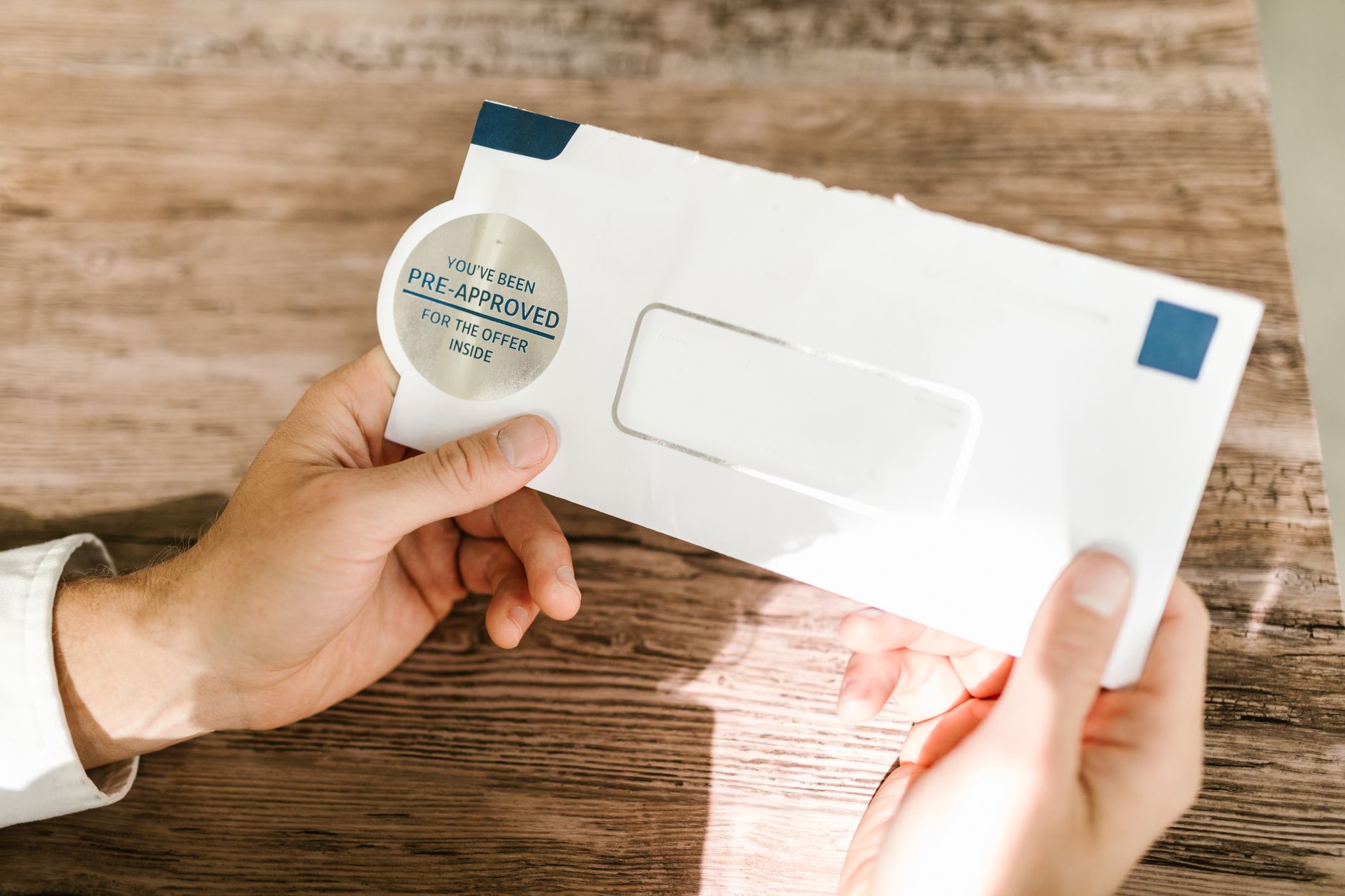
Unsolicited Offers
Legitimate lenders only approach you via advertising. If a lender calls you unprompted offering a loan, it's a scam (see CFPB warnings at ConsumerFinance.gov).
Requests for Personal Information Before Pre-Qualification
Legit lenders offer pre-qualification with soft inquiries (no credit impact). Scammers ask for SSN, banking info, or ID upfront.
Unclear APRs or Hidden Fees
Federal law requires Truth in Lending (TILA) disclosures. Read the Loan Estimate document. If terms are vague or don't match what you discussed, walk away.
FAQ: Personal Loans for Bad Credit
Q: Will a bad credit personal loan hurt my credit score?
A: Yes, initially. The application triggers a hard inquiry (5–10 point drop) and opening a new account lowers average age of accounts (another 5–10 points). However, within 6 months of on-time payments, your score rebounds and rises from the positive payment history. Net impact over 12 months: +30–80 points if you pay on time, –50 points or worse if you miss payments.
Q: Can I get a personal loan with a 550 credit score?
A: Yes. LendingClub, OneMain, Elevate, and NetCredit approve borrowers with no minimum credit score. However, your APR will be at the high end: 32%–35.99%. Focus on improving your DTI and income stability to qualify.
Q: How quickly can I get funding?
A: Most bad credit lenders fund within 1–5 business days. Elevate, OneMain, and NetCredit are fastest (24 hours). Avoid lenders promising same-day funding—it's illegal in most states for loans over $500 to fund same-day.
Q: Is debt consolidation a good reason to get a bad credit personal loan?
A: Yes, if you're consolidating high-interest debt (credit cards at 18%–25% APR). Even at 28% APR, consolidating onto a fixed-term personal loan can reduce your monthly payment and total interest if the term is shorter. Example: $15,000 in credit card debt at 22% APR costs $325/month in interest alone. A personal loan at 28% APR over 60 months costs $191/month total.
Q: What's the difference between a personal loan and a credit builder loan?
A: A personal loan gives you cash upfront to spend. A credit builder loan locks your money in a savings account while you make payments—designed purely to rebuild credit. Personal loans: faster path to cash. Credit builder loans: slower but better rates later.
Q: Do I need a co-signer to get approved?
A: No. Most bad credit lenders don't require co-signers. However, adding a co-signer with good credit (620+) can lower your APR by 3–8 points. Tradeoff: the co-signer is legally responsible if you default.
Q: Should I avoid personal loans if I'm on disability or Social Security?
A: No. Federal law (Debt Collection Improvement Act) prohibits garnishing Social Security or disability payments for debt. This actually makes you a lower-risk borrower in lenders' eyes. However, you'll need to show other income or assets. Lenders like OppFi and NetCredit approve benefit recipients; traditional banks usually don't.
Q: How do I know if 28% APR is actually a good deal?
A: Compare it to your alternative. Credit cards: 18%–25% APR. Payday loans: 400%+ APR. Pawn shops: 40%–240% APR. Illegal lenders: unlimited. At 28%, a personal loan beats most alternatives. Calculate total cost (loan calculator available on each lender's site) and compare to alternatives.
Can I get a personal loan with a 580 credit score?
It may be possible, but approval is not guaranteed. A 580 score can mean fewer lender options, higher APRs, smaller loan amounts, or a need for secured collateral or a co-signer.
What is the average personal loan amount for bad credit?
There is no single average that applies to every borrower. Lenders look at income, debt-to-income ratio, state rules, credit history, and recent payment behavior, so two borrowers below 600 can qualify for very different amounts.
Does TransUnion decide my personal loan amount?
No. TransUnion may provide credit report data or a score that lenders use, but the lender decides approval, APR, and loan amount based on its own underwriting rules plus your income, debt, and application details.
The Bottom Line
A credit score under 600 closes doors at traditional banks, but personal loans from subprime lenders like LendingClub, Elevate, and MoneyLion remain accessible at realistic rates (9.99%–35.99% APR). The key is knowing your debt-to-income ratio, gathering documentation, and comparing total cost across lenders—not just APR. Start with a marketplace application to see multiple offers, then decide. Once approved, make every payment on time to rebuild your score. In 12–18 months of on-time payments, you'll qualify for traditional financing at 40%+ lower rates. Apply today, but only to lenders you've verified through the Consumer Financial Protection Bureau at ConsumerFinance.gov.
Official Sources to Check Before Borrowing
Before accepting a personal loan, review the APR, origination fee, payment schedule, and total repayment cost. The CFPB.gov consumer loans resources can help you understand borrowing costs, credit reporting, and debt collection rights.
Quick Answer: Can You Get a Personal Loan Under 600 FICO?
Some borrowers can get a personal loan with a credit score below 600, but approval, APR, fees, and loan amount depend on income, debt-to-income ratio, state rules, lender criteria, and credit history. A lower score usually reduces options and raises borrowing cost.
Bad-Credit Personal Loan Decision Table
| Credit situation | Likely lender type | Main risk | What to check first |
|---|---|---|---|
| Score below 600 with steady income | Online lender or credit union | High APR or origination fee | APR, fee, payment size, total repayment |
| Thin credit file | Credit union or secured option | Limited approval history | Membership rules, collateral, reporting policy |
| Existing card debt | Debt payoff or consolidation option | Moving debt without lowering cost | Compare payoff timeline and total interest |
| Urgent cash need | Local bank, credit union, or hardship program | Predatory terms | State rules, fees, repayment schedule |
FAQ: Personal Loans Under 600 FICO
Can I get a personal loan with a 580 credit score?
It may be possible, but approval is not guaranteed and costs can be high. Compare APR, fees, monthly payment, and total repayment before accepting.
What is the average personal loan amount for bad credit?
There is no single amount that applies to every borrower. Lenders consider income, existing debt, credit history, state rules, and underwriting criteria.
Does TransUnion decide my personal loan amount?
No. A credit bureau may provide credit report data, but the lender decides approval and loan amount using its own underwriting rules. For consumer credit basics, review CFPB.gov.